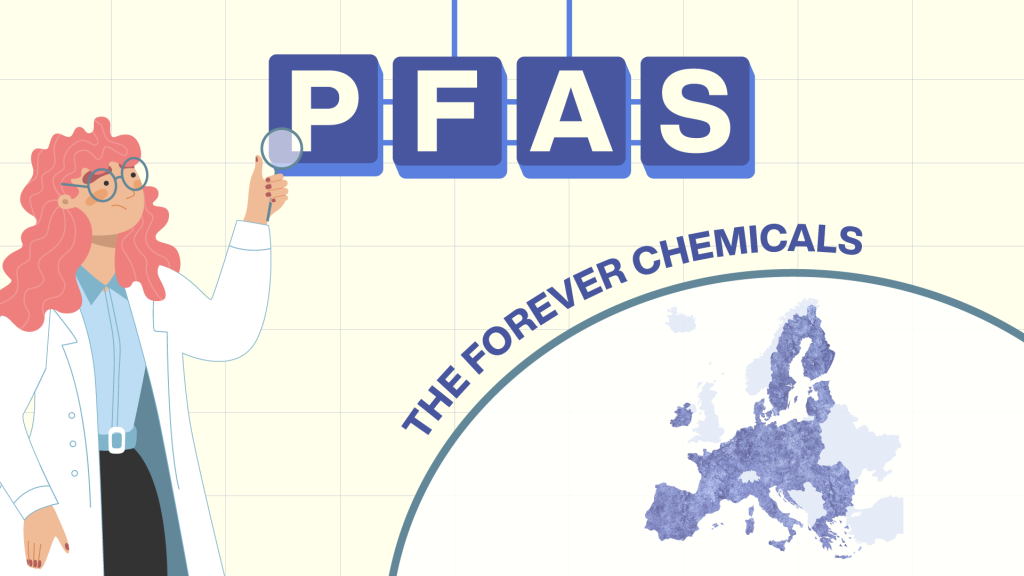
PFAS pollution — per- and polyfluoroalkyl substances, commonly known as “forever chemicals” — has become one of the top priorities on the European Union’s environmental and regulatory agenda. In a context that demands agility and collaboration, FEUGA is strengthening its position as a knowledge transfer by participating in leading European projects such as MAR2PROTECT, ALERT-PFAS, and UrbaQuantum, all aimed at improving the detection, prevention, and management of emerging contaminants.
Beyond facilitating the integration of Galician research groups into these flagship European initiatives, FEUGA contributes across the entire value chain by driving strategic communication, effective dissemination of scientific results, co-creating solutions with regional stakeholders, and promoting both commercial and non-commercial valorization and transfer. In doing so, academia, private and public entities, and key innovation actors reinforce their connections and bring research closer to real-world application, moving beyond technical development toward viable, implementable solutions.
Within ALERT-PFAS, an Interreg-SUDOE project dedicated to design and implement a Transnational Strategy to prevent and mitigate PFAS pollution, FEUGA leads the communication, dissemination, and results transfer work package.
Its core actions include coordinating regional stakeholder groups, delivering targeted awareness campaigns on PFAS-related risks for key sectors, and ensuring the broad visibility of the project’s scientific and technical advances. At the same time, FEUGA plays a central role in promoting and communicating the Transnational Strategy itself, supporting alignment among public authorities, industry representatives, and research institutions in Spain, France, and Portugal toward a shared framework for prevention, risk reduction, and cross-border cooperation.
MAR2PROTECT, aims to prevent groundwater contamination caused by climate change impacts through artificial intelligence–driven solutions and innovative Managed Aquifer Recharge (MAR) strategies. In this project, FEUGA leads the communication, dissemination, and exploitation efforts, ensuring the project’s visibility andthatits solutions reach end users effectively.
Additionally, FEUGA promotes the project’s Community of Practice (CoP), an international network of experts sharing progress, challenges, and best practices related to emerging contaminants and water resource protection worldwide. FEUGA also participates in the European ZeroPollution4Water cluster, which brings together pioneering water-related projects aligned with the European Union’s Zero Pollution ambition and the European Green Deal, strengthening cooperation and joint visibility of results at the European level.
For FEUGA, UrbaQuantum presents an opportunity to test an integrated approach to urban water management through the Multi-Stakeholder Forum in A Coruña, in collaboration with EMALCSA and the University of A Coruña (UDC). The university also leads data collection in the project’s three additional case studies, located in Greece, France, and the United Kingdom.
Through this collaborative model, FEUGA will help lay the groundwork for policy and standardization recommendations and will participate in working groups within two European clusters: ZeroPollution4Water and ICT4Water. Running through 2029, UrbaQuantum will test new sensors, predictive models, and a unified decision-making platform under real-world conditions, consolidating a systemic approach to the early detection of emerging contaminants and pathogens in urban waters.
A More Demanding European Regulatory Framework
This work unfolds within an increasingly stringent European framework on water quality and emerging contaminant control. On 17 February 2026, the Council of the European Union adopted an update to the regulatory framework revising the list of pollutants affecting surface and groundwater. The revision incorporates new substances including pesticides, pharmaceuticals, and PFAS and significantly strengthens environmental standards and monitoring obligations for Member States. Final approval by the European Parliament is expected by the end of March, completing the legislative process.
The revision amends the Water Framework Directive, the Groundwater Directive, and the Environmental Quality Standards Directive. It introduces harmonized limits for PFAS in drinking water, covering the sum of 20 specific PFAS compounds. It also incorporates effect-based monitoring to assess cumulative risks derived from the so-called “cocktail effect” of multiple substances and sets stricter compliance deadlines. Altogether, the framework consolidates a paradigm shift toward prevention at source and emission reduction.
The regulatory reinforcement also responds to the economic dimension of the problem. A European Commission study estimates that if no additional measures are adopted and current pollution levels persist until 2050, cumulative costs across the EU could reach €440,000 million. Acting at source before 2040 could generate savings of approximately €110,000 million.